

A single KYB check can mean dozens of open tabs, a pile of PDFs and hours of copy-paste. With AI in KYB onboarding, most of that is done before the analyst even opens the case.
KYB, or Know Your Business, is how you verify a company before you work with them. Today, most of these checks are done manually: an analyst does all the groundwork, jumps between many tools and then writes up the case. AI in KYB means letting AI prepare that case, by checking documents, websites, screening hits and adverse media, so your analysts can focus on the decision.
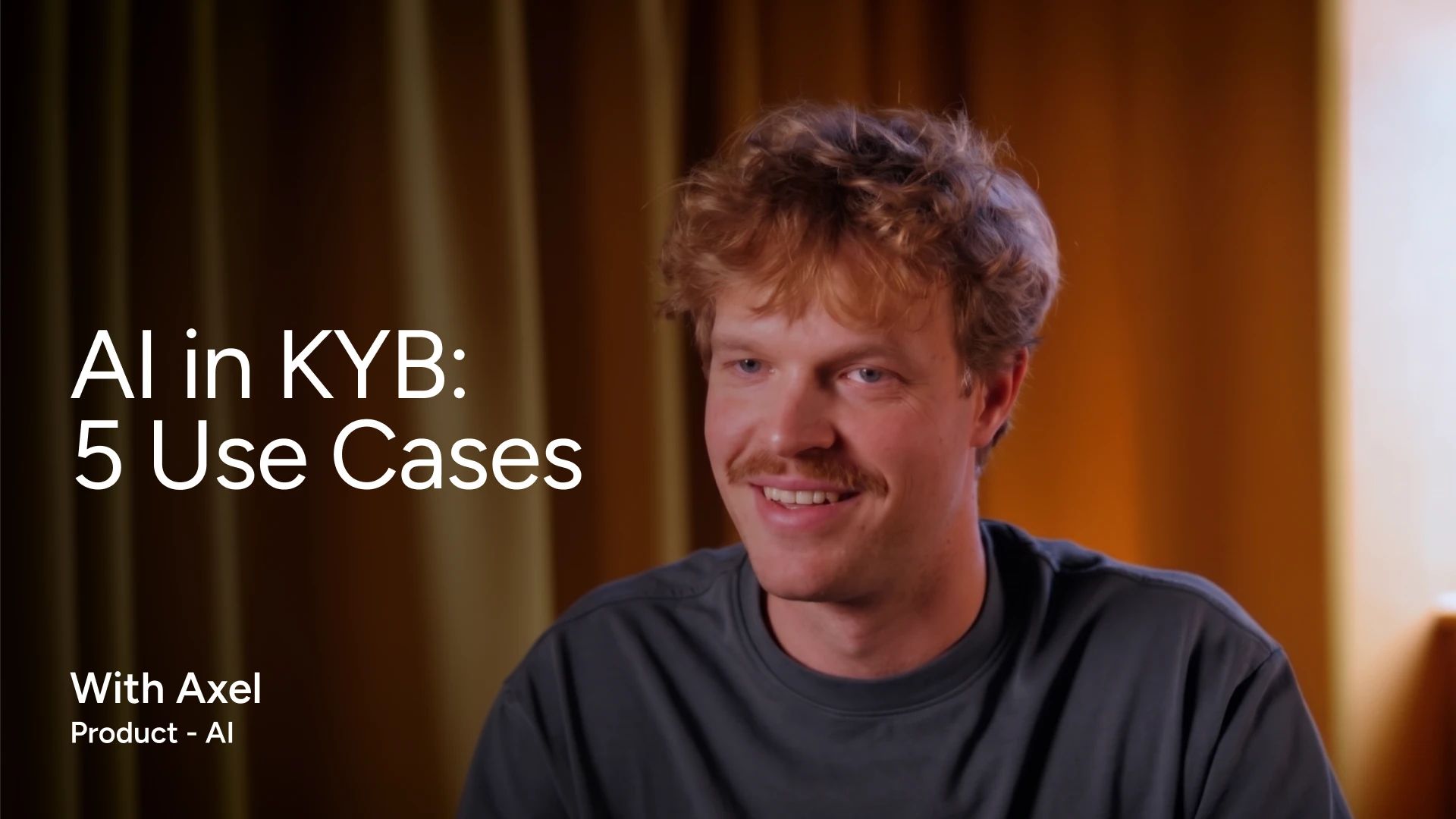
In the video, Axel from spektr's AI product team walks through five use cases where AI excels at KYB, and how each one changes the work:
- 0:00 Why AI in KYB changes the work
- 0:21 What is AI in KYB?
- 1:09 Use cases 1 and 2: Business verification, website and address checks
- 1:41 Use case 3: Sanctions and PEP screening
- 2:40 Use case 4: Adverse media
- 3:11 Use case 5: The KYB summary
- 4:15 What changes for your team
Use case 1: Website check
Every onboarding looks different, depending on the type of customer you onboard and the type of business you run. What they have in common is that they all need to verify the business is really the company it says it is. That's business verification, and it often starts with the website.
Say a company declares that it sells accounting software in Denmark. Today, an analyst typically reviews the website manually. With AI, much of this happens before the analyst even opens the case. AI compares the website with the information the company provided: what it sells, how old the domain is, whether it has real contact details, and whether anything restricted is offered for sale.
Use case 2: Address check
The second half of business verification is the address. Today, an analyst looks it up on a map and cross-checks it against the company registry. With AI, much of this check is done before the analyst even opens the case.
Use case 3: Sanctions and PEP screening
Next comes screening for sanctions, warnings, adverse media and PEP hits. Say one of the directors is called Maria Garcia. A common name like that can bring back dozens of hits. Most are clearly someone else, but today the analyst still opens each one, compares the details and writes a note on why it's not a match.
With automated processes, fuzzy matching first finds the likely hits, even when the name is spelled differently or written in another alphabet. Each hit is then compared with your customer's details, like date of birth and nationality. To finish, the AI writes a step-by-step reasoning summary about its recommendation.
Clear non-matches and matches come back with an explanation. Anything the AI isn't sure about is marked as uncertain and sent to an analyst.
Use case 4: Adverse media
In this example, Maria isn't on a sanctions list, but the company itself comes back with several adverse media hits. The analyst would have to read each article to work out whether it's really about this company.
AI can offer a helping hand here. It takes the adverse media hits and checks whether each one is really about the company. If a story is relevant, AI sorts it by category, such as fraud or corruption, with the summary, the source and the date. Instead of reading every article, your analyst sees right away if the hits are false and why.
Use case 5: The KYB summary
Once every check is done and you've gone through all of your compliance steps, it all comes together in the KYB summary. Today, this can mean going back through each step, the documents, ownership, screening hits and adverse media, and writing it all up by hand.
With AI, the summary is drafted for you. It brings together the key findings from every check, shows what's been cleared and what's still open, and points out where things don't add up.
What you still decide: whether the picture is complete, and whether to approve, ask for more information or escalate. AI prepares the case. Your analyst makes the call.
What changes for your team
Outside of the website and address checks, the AML screening and the AI summary, there are many more ways AI can support KYB, but the pattern stays the same. In each step, the work that used to take the most time was finding, copying and comparing. With AI, that's done before the analyst even opens the case, with the reasoning shown for every finding.
So what changes with AI in KYB onboarding? Not who makes the decision, but how fast you get there. Less time gathering, more consistent cases, and every step traceable. Your analysts stop doing the groundwork and start doing the judgment.
Frequently asked questions
What is AI in KYB?
KYB, or Know Your Business, is how you verify a company before you work with them. AI in KYB means using AI to prepare the case, by checking documents, websites, screening hits and adverse media, so analysts can focus on the decision.
How does AI check a company's website in KYB?
AI compares the website with the information the company provided: what it sells, how old the domain is, whether it has real contact details and whether anything restricted is offered for sale.
How does AI handle sanctions and PEP hits in KYB?
Fuzzy matching finds the likely hits even when a name is spelled differently or written in another alphabet. Each hit is compared with details like date of birth and nationality, and the AI writes its reasoning step by step. Anything it isn't sure about goes to an analyst.
How does AI handle adverse media in KYB?
AI checks whether each article is really about the company. Relevant stories are sorted by category, such as fraud or corruption, with a summary, the source and the date.
What is a KYB summary?
A KYB summary brings together the key findings from every check. It shows what's been cleared and what's still open, and points out where things don't add up. The analyst still decides whether to approve, ask for more information or escalate.
Open your doors to new businesses, faster
See how KYB onboarding works at spektr. Onboarding individuals too? Read AI in KYC: How AI Speeds Up KYC Verification and Onboarding.